
Buying property in Lombardy offers more than just a place to live — it opens the door to an elevated lifestyle, strategic investment, and timeless beauty. Whether you’re considering a stylish Milanese apartment, a tranquil Lake Como retreat, or a farmhouse surrounded by vineyards, buying property in Lombardy gives you access to one of Europe’s most prestigious and stable real estate markets.
In this guide, we explain the process step-by-step, highlight essential legal precautions, and emphasize why having a trusted real estate attorney is critical for your success. With the right support, buying property in Lombardy can be smooth, safe, and rewarding.
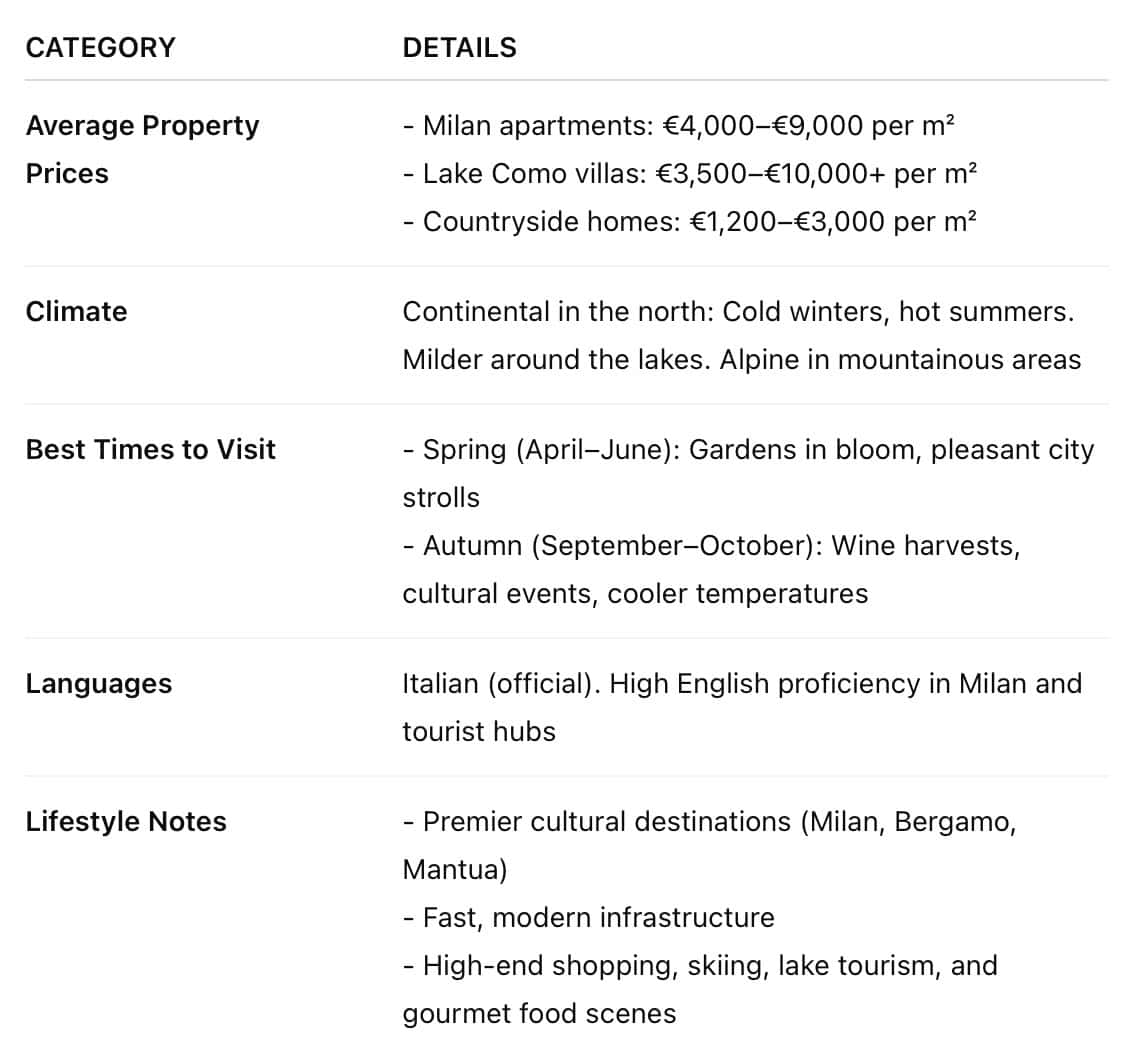
Quick Facts: Lombardy
Step 1: Understand the Market Before Buying Property in Lombardy
Lombardy is Italy’s economic and cultural hub, with property options to match every lifestyle and investment strategy. Key areas include:
Milan – Fashion, finance, and innovation center with strong rental demand
Lake Como – World-renowned villas and scenic tranquility
Bergamo & Brescia – Cultural charm with excellent value
Lecco & Varese – Outdoor lifestyle near lakes and mountains
Pavia, Mantua, Cremona – Historical towns with lower prices and authentic living
With international airports (Malpensa, Linate, and Bergamo), high-speed trains, and proximity to Switzerland, buying property in Lombardy ensures exceptional connectivity.
Ask yourself:
– Is this a primary residence, vacation home, or rental investment
– Do you want city access, mountain air, or lake views
– Are restoration projects or turnkey properties more appealing
Due diligence is especially important in protected areas, rural zones and historic city centers, where unique local rules may apply.

Step 2: Work with Trusted Professionals When Buying Property in Lombardy
Success when buying property in Lombardy hinges on having the right team.
Real Estate Agent
Choose agents who:
- Are registered with the Camera di Commercio
- Hold an agente immobiliare abilitato license
- Are transparent and bilingual
- Work in cooperation with your legal team
Why a Specialist Real Estate Attorney Is Essential
Lombardy’s property laws are complex, especially near the lakes and in heritage districts. A dedicated attorney ensures:
- Independent legal protection
- Zoning and renovation compliance
- Verification of title, taxes, and permits
- Clear, binding contracts
Avoid using lawyers that sellers or agents recommend, as conflicts of interest can put your investment at risk.
Step 3: Legal Due Diligence When Buying Property in Lombardy
This crucial phase protects you from legal, financial, and logistical problems.
Your attorney will:
- Confirm ownership and title
- Check for debts, liens, or easements
- Validate zoning compliance and renovation permissions
- Review heritage restrictions and shared ownership issues
Common Legal Pitfalls to Avoid When Buying Property in Lombardy
Even in a well-regulated region like Lombardy, unexpected legal challenges can arise. Due diligence is not just advisable, but essential when buying property in Italy. Here are some examples that highlight just a few of the legal complexities you might face when buying property in Lombardy. From preservation orders to hidden tenancy rights, each issue carries financial and emotional consequences. However, an independent attorney performing comprehensive legal due diligence can identify these risks early, address them effectively, and, in many cases, entirely avoid them — ensuring a smoother, safer path to property ownership.
Lakefront Villa Restrictions in Como
A buyer in Como fell in love with a stunning lakefront villa and eagerly envisioned a modern renovation to transform it into a luxury retreat. However, upon further investigation, the buyer discovered strict preservation orders protecting the property due to its proximity to historic buildings and its location within a protected scenic corridor. Consequently, these orders prohibited any alterations to the exterior and required special permits even for interior renovations. As a result, the buyer had to completely revise their plans and budget.
Heritage Zoning Challenges in Central Milan
In central Milan, another buyer purchased an elegant apartment in a historic palazzo, planning to add a balcony and update the façade with contemporary finishes. Unexpectedly, however, urban heritage zoning laws strictly regulated modifications to the building’s appearance. Therefore, the municipal heritage office denied permission for the balcony and required approval for repainting. Without proper legal advice upfront, the buyer consequently faced delays, extra costs, and ultimately had to abandon several planned upgrades.
Unregistered Extensions Near Pavia
A countryside home near Pavia initially appeared to be the perfect rustic escape. Yet, during the legal review, the buyer discovered that several extensions lacked registration in the land registry and had been built without proper permits. This oversight immediately invalidated the sale until the buyer either legalized or demolished the unauthorized structures. What initially seemed like a simple purchase thus turned into a months-long legal process involving retroactive permits and costly surveys.
Leasehold Land Issues in the Alpine Region of Sondrio
In the Alpine region of Sondrio, a buyer found a cozy ski chalet nestled in the mountains. Although everything seemed in order at first, a deeper investigation revealed that the land beneath the property belonged to the local municipality and was leased under a long-term Alpine land grant scheme. Moreover, the lease terms included specific usage restrictions and uncertain renewal conditions. Consequently, the buyer had to renegotiate the lease or seek alternative properties without such limitations.
Active Farmer Tenancy Contract in Southern Lombardy
Another buyer, seeking agricultural land in southern Lombardy for a vineyard project, unknowingly purchased a parcel tied to an active farmer tenancy contract (contratto di affitto agrario). Legally, this contract gave the farmer the right to continue using the land for several more years, with possible legal renewal rights. Therefore, this arrangement delayed the buyer’s plans and made resale more difficult and less attractive to future investors.
Step 4: Make a Reservation Offer – “Proposta di Acquisto”
Once your initial due diligence is complete and you’ve decided to move forward with a property, the next step is to formalize your intention to buy with a reservation offer, known in Italian as a proposta di acquisto.
At this stage, many real estate agents suggest using a standard pre-printed form — a generic template they apply to all buyers. While this approach may seem quick and convenient, it can expose you to significant legal and financial risks. These forms rarely consider your property’s specific characteristics, regional regulations, or your unique needs as a foreign buyer. In other words, these forms do not protect you — they prioritize moving the deal forward as quickly as possible.
Therefore, it’s essential that your reservation offer be customized and drafted by your own independent attorney. This ensures the document is tailored to the transaction and that your interests are fully safeguarded from the outset.
Your attorney should carefully draft the offer to include:
- The agreed purchase price and any key contingencies (such as subject to mortgage approval, zoning checks, or final due diligence)
- The deposit amount, which is typically 5–10% of the total price and placed in escrow until the offer is accepted
- A clear validity period, specifying how long the offer remains open for acceptance, and what the next contractual steps will be
Once the seller accepts this offer in writing, it becomes legally binding. From that moment onward, both parties are committed to progressing toward a sale under the agreed terms. This is why professional legal oversight is absolutely vital when buying property in Lombardy — especially at this early stage.
In short, don’t sign a standardized agent form and hope for the best. Insist on a legally sound, tailored proposal that reflects your rights, your responsibilities, and your specific goals.
Step 5: Sign the Preliminary Contract – “Compromesso”
Once your reservation offer has been accepted and the property passes initial legal checks, the next step in buying property in Lombardy is the preliminary contract, or compromesso. This legally binding agreement formalizes the buyer’s and seller’s mutual intent to complete the transaction.
At this stage, many real estate agents propose a standard template contract. While convenient, these generic forms are risky — they often ignore Lombardy-specific planning laws, omit crucial buyer protections, or fail to reflect the outcome of your attorney’s due diligence.
To protect your interests, your own real estate attorney should draft or fully revise the contract. It must account for the legal, financial, and strategic realities of your specific property purchase.
A Properly Drafted Compromesso Should Include:
- Purchase price and payment schedule
- Detailed legal description of the property, including land registry (catasto) details
- Conditions precedent (condizioni sospensive) require the buyer or seller to fulfill specific obligations or obtain approvals before completing the sale.Common examples:
- Urban planning or renovation approvals
- Confirmation of full legal ownership
- Removal of liens, mortgages, or encumbrances
- Zoning compliance or utilities clearance
If these conditions are not met within the agreed timeframe, you may legally withdraw without penalty.
Penalties for breach of Compromesso
-
- If the buyer pulls out without cause, the deposit is lost.
- If the seller withdraws unjustifiably, double the deposit is owed to the buyer (caparra confirmatoria).
How to Securely Handle the Deposit
At this stage, a 10–20% deposit is typically paid. However, Italian law strictly regulates who may legally hold these funds.
Neither real estate agents nor lawyers may hold buyer funds in escrow.
Only a public notary (notaio) is authorized to hold funds in a dedicated escrow account (conto dedicato del notaio), regulated under Italian fiduciary law.
This notarial escrow account legally protects your deposit and releases funds only when all contractual conditions are met. Your attorney coordinates with the notary to manage the deposit securely.
Using a Power of Attorney
If you cannot be physically present in Italy to sign the compromesso, you may authorize your attorney to act on your behalf using a power of attorney (procura speciale). This is a common, legally recognized method that allows smooth progression without travel delays.
Step 6: Final Signing – The Notary’s Role When Buying Property in Lombardy
The final step in buying property in Lombardy involves signing the deed of sale (rogito notarile). By law, you must complete this step in the presence of a public notary (notaio), who legally certifies the property transfer and registers your ownership. The Italian government licenses the notaio to act in this capacity.
Know Your Rights: The Buyer Chooses the Notary
As the buyer, you have the full legal right to choose the notary. Many sellers or agents may suggest one — but you are under no obligation to accept. Choosing your own notary helps ensure:
- Full alignment with your legal team
- Independence from the selling party
- Sufficient time for proper document review and closing procedures
Your attorney can recommend an experienced notary who works transparently and efficiently, especially with international buyers.
What the Notary Does — and Doesn’t Do
The notary is a state-appointed official whose duty is to:
- Verify the identities and legal capacity of the parties
- Confirm that the transaction complies with Italian law
- Calculate and collect applicable taxes
- Draft, explain, and read aloud the deed of sale in Italian
- Register the deed with the Italian land registry
However, the notary is not your advocate. Their role is limited to ensuring the transaction is formally valid — they do not:
- Negotiate terms
- Investigate unregistered legal risks
- Advise on deal fairness
- Review off-record planning or inheritance issues
Only your own attorney can provide these vital services and ensure your investment is properly protected through closing.
Language Requirements & Legal Representation
If you are not fluent in Italian, the law requires that the notary provide a certified translation of the deed to ensure you fully understand the content and implications. Your bilingual attorney can serve as both translator and legal representative, helping to avoid miscommunication and last-minute confusion.
And, if you cannot attend in person, you can use the power of attorney you granted in Step 5 for the final signing. This allows your attorney to finalize the transaction on your behalf.
Buying in Lombardy: Key Legal Points
Investing in property in Lombardy combines lifestyle, security, and financial strength. From lakeside luxury to cultural city living, opportunities abound — but they require careful planning and legal protection.
At De Tullio Law Firm, we specialize in helping international clients safely manage the complex process of buying property in Lombardy. Our bilingual team handles every detail so you can focus on enjoying your new Italian life.
Contact us today for a free consultation and take your first step with confidence.
You may also like to download our free Guide to Buying property in Italy.