
Buying property in Molise offers a rare opportunity to own a slice of authentic Italy – unspoiled, serene, and full of character. Unlike the crowded markets of Tuscany or the high prices of Lombardy, Molise remains one of the country’s most affordable and undiscovered regions. Whether you’re drawn to its medieval hilltop villages, Adriatic coastline, or green countryside, Molise is ideal for those seeking a quiet lifestyle, a smart investment, or a peaceful vacation home.
In this guide, you’ll learn how to buy property in Molise with clarity and confidence. We’ll walk through the buying process, legal requirements, and potential pitfalls, explaining why professional legal support is essential at every step.
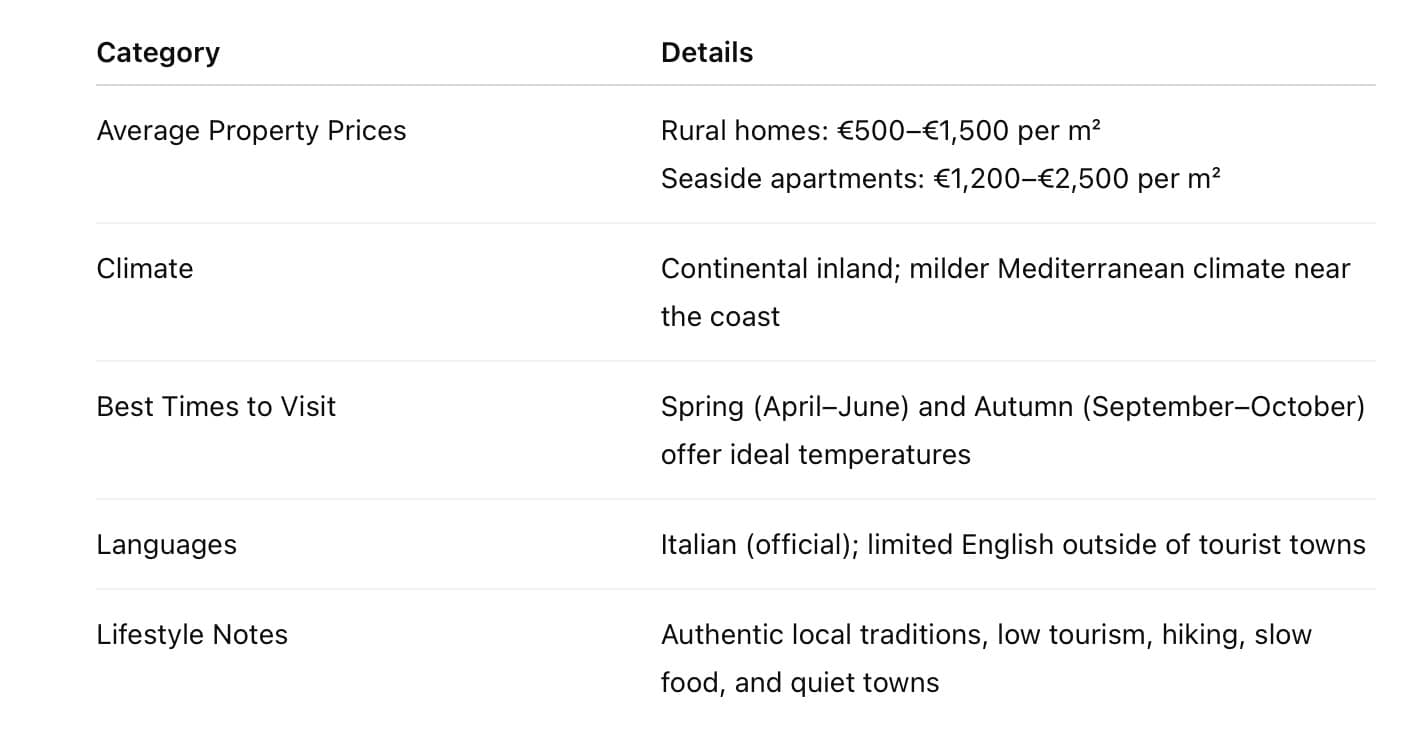
Quick Facts: Molise
Step 1: Understand the Molise Property Market
Molise is one of Italy’s smallest regions, but it offers surprising variety for property buyers. You can choose between mountain towns, coastal villages, or tranquil farmland – all at some of the lowest prices in Italy.
Key areas in the Molise region include:
- Campobasso – The regional capital with a small-town feel, local amenities and medieval charm
- Termoli – A lively coastal town with beaches, historic architecture and ferry links to the Tremiti Islands
- Agnone – Known for its bell foundries and artisan traditions
- Larino and Isernia – Lesser-known gems with Roman heritage and walkable historic centers
- Rural inland villages – Ideal for buyers seeking restoration projects or off-grid living
Molise appeals to buyers looking for space, simplicity, and a connection to traditional Italian life. While tourism is growing, the region remains relatively untouched, offering better value and lower competition than more famous regions.
Step 2: Build the Right Team
Success when buying property in Molise largely depends on working with experienced, independent professionals who understand the local market and legal landscape.
Real Estate Agent
First and foremost, choose a licensed agent who is:
-
Registered with the Camera di Commercio
-
Fluent in both Italian and English
-
Willing and able to work transparently alongside your legal team
In Molise, local knowledge proves especially crucial. Since many properties are inherited or family-owned and often not listed online, a trusted agent can help you access these off-market deals. Furthermore, they can negotiate effectively on your behalf, increasing your chances of a smooth purchase.
Real Estate Attorney
Equally important is hiring an independent attorney. Legal complexity often goes underestimated, particularly in rural areas where issues like unclear land boundaries, inheritance claims, and historic protections frequently arise. Therefore, an independent attorney will:
-
Conduct full legal due diligence
-
Verify ownership, title, and planning permissions
-
Draft or carefully review all contracts
-
Coordinate seamlessly with your notary and real estate agent
Most importantly, avoid using a lawyer recommended by the seller or agent, as this could lead to potential conflicts of interest. Instead, ensure your attorney works solely in your best interests throughout the entire process.
Step 3: Legal Due Diligence When Buying Property in Molise
Molise’s quiet charm comes with its own set of legal challenges. Older rural homes often have complex ownership histories, missing paperwork, or unregistered renovations.
Your attorney will:
- Check for debts, liens, or shared ownership claims
- Ensure compliance with zoning and renovation laws
- Confirm whether the land is subject to agricultural restrictions
- Identify any conservation or heritage protections that limit development
Common Pitfalls When Buying Property in Molise
Even in a peaceful, low-cost region like Molise, legal surprises can lead to delays or financial loss. Here are some examples of issues buyers have faced:
Unclear Inheritance in a Mountain Village
A buyer found a charming stone house in a small village for under €30,000. However, after making a reservation offer, the buyer learned the property had been passed down informally for generations. Several distant relatives had unregistered inheritance claims. The legal team spent months locating heirs and finalizing documentation before the sale could proceed.
Missing Building Permits on Coastal Property
An international buyer purchased a renovated seaside apartment near Termoli. The renovations included new windows and a balcony. Unfortunately, the previous owner had never obtained the proper planning approvals. After purchase, the buyer faced fines and had to file retroactive applications to legalize the changes—delaying the ability to rent the property and raising costs significantly.
Agricultural Land Restrictions Near Isernia
A buyer interested in planting an olive grove bought land outside Isernia, assuming it was ready for cultivation. However, the property was classified under agricultural zoning rules and was subject to a tenant farmer’s rights. The buyer had to negotiate compensation with the farmer and seek reclassification of a portion of the land—a complex process requiring legal expertise and patience.
Lack of Access Rights in the Countryside
Another buyer fell in love with a rural farmhouse accessed only by a dirt road across a neighbor’s field. There was no official easement registered. While the seller claimed it was “always used that way,” the buyer’s attorney flagged the issue. Without proper legal access, the property couldn’t be mortgaged or legally accessed without the neighbor’s written consent, requiring negotiation before closing the deal.
Lack of Certificate of Habitability (Certificato di Agibilità)
A buyer purchased a countryside home in Molise only to find it lacked the required certificate of habitability. Without this certificate, the buyer could not legally live in the house or connect utilities. They had to apply for inspections and make costly upgrades to meet safety and health standards. This delay prevented them from moving in or renting out the property until authorities approved the certificate. This shows why you must always verify the certificate of habitability before buying.
Step 4: Make a Legally Sound Offer
The proposta di acquisto, or reservation offer, is your first formal step. Many agents use standard templates that may not reflect your unique legal situation. These forms often ignore regional quirks or buyer protections.
Your attorney should:
- Draft a custom offer outlining contingencies and conditions
- Specify the deposit amount (usually 5–10%)
- Set a validity period for acceptance
- Include clauses based on due diligence findings
This tailored approach reduces risk and avoids misunderstandings later.
Step 5: Sign the Preliminary Contract – “Compromesso”
Once the offer is accepted and legal checks are complete, you’ll move to the compromesso – a binding preliminary agreement.
The contract should include:
- Final purchase price and payment schedule
- Complete property description from the land registry (catasto)
- Any suspensive conditions (e.g., permit approvals, debt clearance)
- Legal remedies if either party defaults
At this stage, a larger deposit is usually required (10–20%), which must be held in a notary’s escrow account. Neither agents nor lawyers are legally allowed to hold buyer funds.
Step 6: Finalize the Sale with a Notary
The Notary’s Role
The final stage of buying property in Molise involves signing the deed of sale, or rogito notarile. By law, this must take place in the presence of an Italian notary (notaio), a state-appointed legal official whose role is to certify and register the transaction.
Importantly, the notary is not a representative of either party. Italian law requires that the notary remain strictly impartial. Their duty is to ensure that the sale complies with legal formalities and to protect the public interest – not to advise or advocate for buyers or sellers. For this reason, you should not rely on the notary to identify or resolve issues such as hidden liabilities, unregistered structures, or unfair contract terms.
As the buyer, you have the exclusive right to select the notary. While the seller or agent may recommend someone, you are under no obligation to accept their choice. Choosing an independent notary, ideally one who has experience working with international clients, can help ensure the process is handled transparently and without conflicts of interest. Your attorney can recommend a trusted notary and coordinate all preparations on your behalf.
What The Notary Does
- Verifies the identities and legal standing of all parties
- Confirms that the sale complies with Italian property and tax law
- Drafts and reads the final deed aloud in Italian
- Collects and remits applicable taxes
- Registers the deed with the Italian land registry (Conservatoria dei Registri Immobiliari)
What The Notary Does Not Do
There are also clear limits to the notary’s role. The notary does not:
- Perform due diligence on the property
- Advise you on whether the deal is fair or financially sound
- Investigate off-record risks, such as easements or zoning restrictions
- Represent your interests in disputes or negotiations
That’s why it’s crucial to have your own legal advisor involved throughout the entire process, right up to the final signature. Moreover, your attorney can ensure the final deed accurately reflects your agreements, carefully review last-minute details, and accompany you to the notarial appointment. Additionally, if you cannot attend in person, you have the option to grant a power of attorney (procura speciale) to your lawyer, allowing them to sign on your behalf.
Furthermore, if you are not fluent in Italian, the law requires the notary to provide a certified translation of the deed. In this case, your bilingual attorney can assist during the signing to ensure you fully understand everything you are agreeing to.
In short, while the notary ensures the deal is legally binding and properly registered, your attorney guarantees that it is truly safe, fair, and aligned with your goals.
Buying in Molise: Key Legal Points
Buying property in Molise offers something rare in today’s market – genuine value, unspoiled beauty, and the chance to live among welcoming communities untouched by mass tourism. But the legal process requires careful attention.
At De Tullio Law Firm, we help international buyers invest safely in Italian property. From legal due diligence to final signing, we provide clear guidance at every step so you can enjoy your new home with peace of mind.
Contact us today for a free consultation.
You may also like to download our free Guide to Buying Property in Italy.