
Buying property in Veneto means investing in a region where rich history, stunning architecture and economic strength converge. From the romantic canals of Venice to the vineyards of Valpolicella and the Dolomites’ alpine charm, Veneto offers diverse real estate opportunities suited to lifestyle buyers, investors and retirees alike.
Whether you’re drawn by the cultural prestige of historic cities or the tranquility of countryside homes, managing the process successfully requires insight, planning and expert support.
Why Buying Property in Veneto Is So Appealing
Veneto, located in northeastern Italy, stands out for its varied landscapes, economic resilience, and international appeal. Venice attracts global attention, but towns like Verona, Treviso and Vicenza offer equally compelling lifestyle and investment value with less crowding.
Moreover, Veneto boasts excellent infrastructure, with fast train connections, three major airports and a well-developed road network. This connectivity, combined with the region’s high standard of living, makes it a smart choice for long-term property ownership.
Quick Facts: Veneto
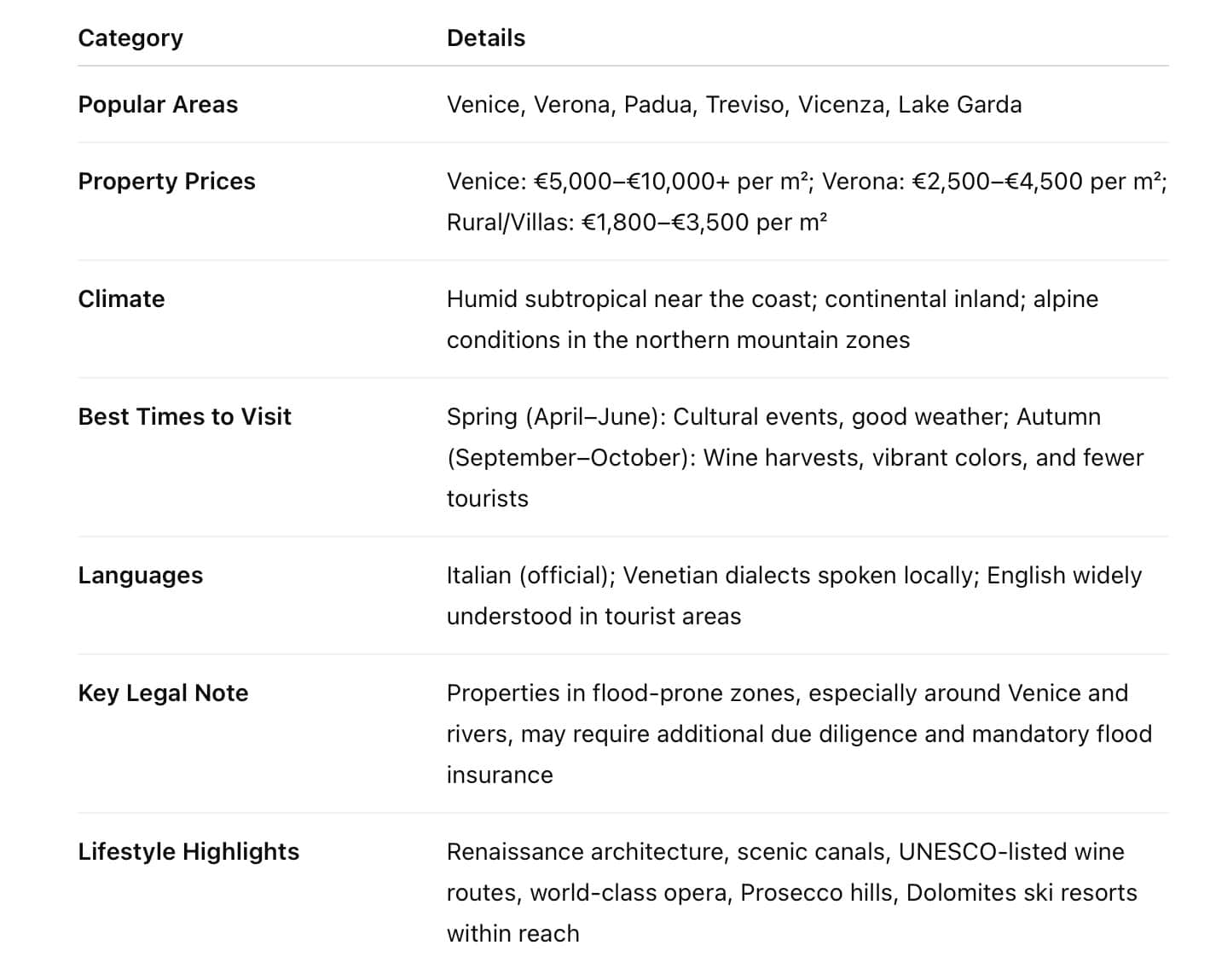
Step 1: Understand the Local Property Market
The Veneto region includes urban centers, coastal resorts, lake areas and mountain retreats. Property values vary depending on location and local regulations.
- Venice and the lagoon islands feature high prices and heritage restrictions.
- Verona combines elegance and affordability, especially in residential neighborhoods.
- The Prosecco hills and Valpolicella area offer countryside villas with vineyard views.
- Mountain towns near Cortina d’Ampezzo and the Dolomites appeal to ski and nature lovers.
Before beginning your search, clarify your goals. Are you looking for a second home, rental investment, or relocation base? Also, assess your comfort level with renovation versus move-in-ready properties.
Step 2: Build Your Team when Buying Property in Veneto
Success when buying property in Veneto depends on working with the right professionals.
Choose a licensed real estate agent registered with the Chamber of Commerce and fluent in both Italian and English. Ideally, your agent should also have deep knowledge of local zoning, market conditions and negotiation practices.
More importantly, retain an independent real estate attorney. Legal oversight is crucial, particularly in historic districts and rural areas. Your attorney will:
- Perform legal due diligence on title, ownership, and zoning
- Identify potential liens, easements, or rights of use
- Draft and review contracts in line with your goals
- Coordinate with the notary for closing
Avoid using lawyers suggested by agents or sellers, as this creates potential conflicts of interest.
Step 3: Understand Common Legal Pitfalls when Buying Property in Veneto
Veneto’s mix of ancient buildings, protected landscapes and varied zoning laws means legal challenges can arise if you’re not fully informed.
Unregistered Alterations in Venice
One buyer purchased a charming flat near Rialto Bridge, unaware that previous renovations had not been properly declared in the land registry. The deal stalled until the seller updated records and obtained compliance certificates, causing a six-month delay.
Heritage Restrictions in Vicenza
A couple bought an apartment in a historic villa near Vicenza. They hoped to install modern windows and alter internal walls, but local heritage rules blocked these plans. The project required multiple approvals, expert architectural input and extensive re-budgeting.
Agricultural Zoning in Valpolicella
In the hills near Verona, a buyer acquired a rustic property to turn into a boutique winery. However, the land’s agricultural zoning required them to obtain specific licenses and rework their development plans in line with local use regulations.

Step 4: Make a Legally Sound Offer
Once you find the right property and complete preliminary checks, the next step is submitting a proposta di acquisto (reservation offer). Many agents rely on pre-printed forms, but these documents may not address your specific needs.
Have your attorney draft a tailored offer that clearly outlines the price, deposit terms, contingencies (such as planning approvals or financing), and expiration date. Once accepted, the proposal becomes legally binding and moves the process forward to the preliminary contract stage.
Step 5: Sign the Preliminary Contract (Compromesso)
The compromesso formalizes the agreement. At this stage, the buyer typically pays 10–20% of the purchase price. Again, estate agents will offer a standard template for this contract. However, it should be tailored to your circumstances and reflect:
- The final negotiated terms
- Any conditions precedent (zoning approvals, title corrections, or financial arrangements)
- Penalties for breach of contract
In Italy, only a notary can legally hold deposit funds in escrow. Your agent or attorney can help arrange this. You should not allow the seller – or anyone else – to manage your buyer funds directly.
Step 6: Finalize the Sale with the Notary
At closing, both parties must sign the rogito notarile (deed of sale) in the presence of a public notary. The notary registers the property in your name and ensures that the transaction complies with Italian law.
The buyer has the legal right to choose the notary. By law, the notary must remain impartial in the transaction. They cannot offer legal advice. While the notary ensures formal legality, they do not therefore protect your personal interests. That role remains with your attorney, who will confirm final documentation, review taxes and attend the signing with you.
The notary’s role is to:
- Validate identities and contracts
- Ensure legal compliance
- Collect and register taxes and fees
- Read the deed aloud and register the sale
If you are not fluent in Italian, the notary must provide a certified translation of the deed. In addition, you will need a translator at the signing of the deed of sale. Alternatively, your bilingual attorney can assist during the meeting. This ensures clarity, avoids misunderstandings and provides you with legal representation.
If you cannot be physically present, your attorney can represent you with a power of attorney.
Finally …
With its mix of culture, investment potential and world-class lifestyle, Veneto offers something for every type of buyer. However, the legal and logistical aspects of Italian property law requires local knowledge and expert guidance.
At De Tullio Law Firm, we help international clients purchase property in Italy safely and confidently. From first consultation to final signature, we are right beside you. Book a free call with us to discuss your plans.
You might also like our downloadable Guide to Buying Property in Italy.